
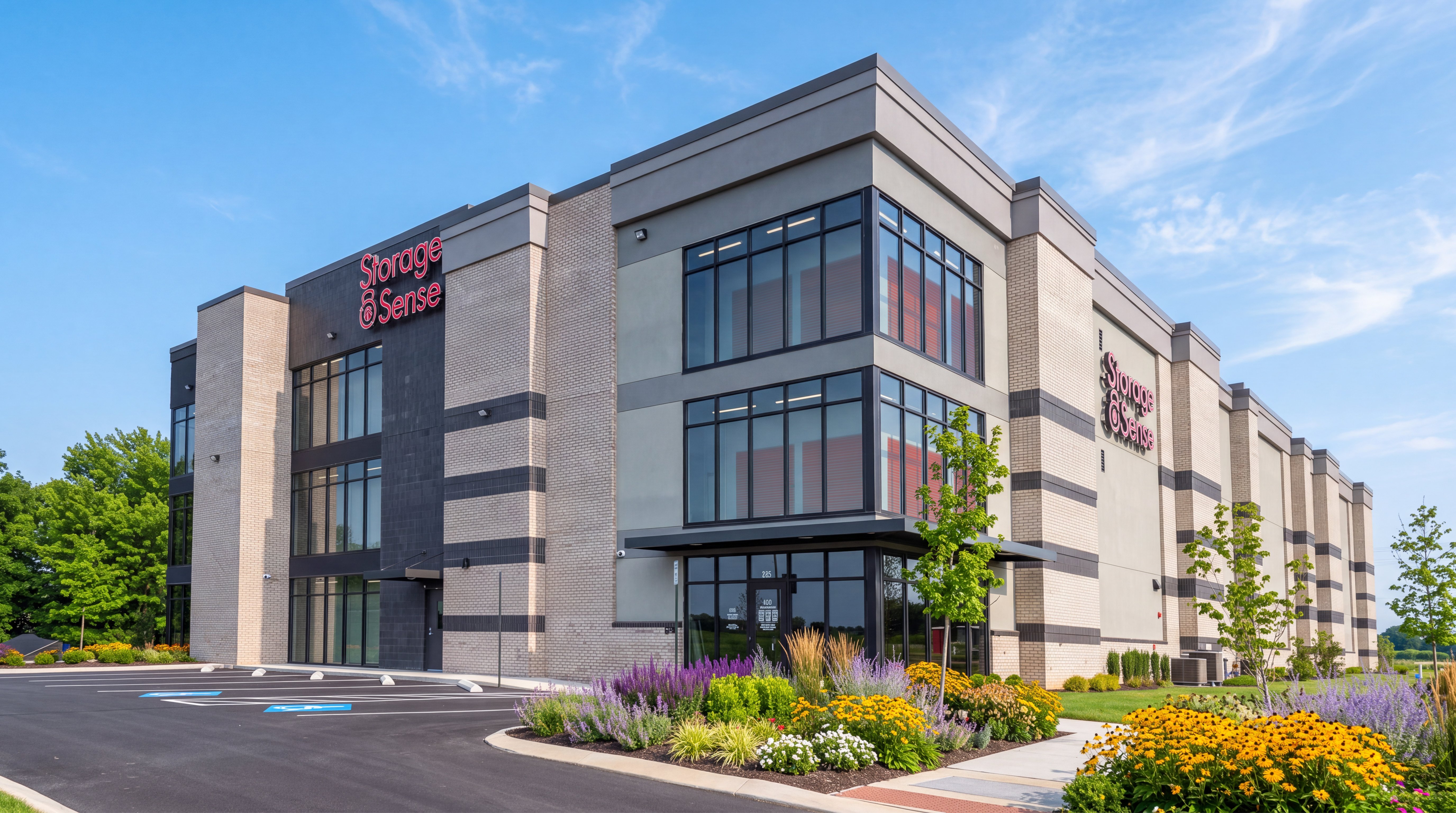
For years, multistory self-storage was viewed as an urban solution. Tight land constraints and premium real estate values made building up the obvious choice in dense metropolitan areas.
But that assumption is changing.
Today, developers in suburban and secondary markets are discovering that multistory facilities can solve a different set of challenges: maximizing developable land, creating operational efficiencies, and supporting mixed-use concepts that include flex space, office, retail, or other tenant opportunities.
Here are three trends reshaping where and why multistory self-storage makes sense.
Trend #1: Land Efficiency Matters Everywhere
Land costs are rising in many suburban and growing secondary markets, not just downtown cores.
Developers are finding that building vertically allows them to:
- Increase rentable square footage
- Maximize constrained parcels
- Preserve room for amenities or future expansion
- Improve project economics on higher-value sites
As competition for commercial land increases, a multi-story design can create more revenue-generating space without a larger footprint.
Key takeaway: The financial case for building up is no longer limited to major cities.
Trend #2: Mixed-Use and Flex Space Developments Are Expanding
Many developers are looking beyond traditional self-storage layouts and exploring ways to generate multiple revenue streams from a single property.
Flex space continues to gain traction because it can serve:
- Small businesses
- Contractors
- E-commerce operators
- Service providers
- Local entrepreneurs
A multistory storage facility can help optimize a site while freeing valuable ground-level space for flex units, customer-facing businesses, or other commercial uses.
Instead of viewing storage and flex space as separate opportunities, developers are increasingly combining them to create more versatile properties.
Key takeaway: Multistory designs can support broader site development strategies that include self-storage and flex space.
Trend #3: Customers Expect More from Modern Facilities
Today's customers are looking for convenience, security, and a professional experience regardless of market size.
Modern multi-story facilities can offer:
- Climate-controlled units
- Enhanced security
- Better traffic flow
- Improved aesthetics
- Integrated technology and access control
These features are increasingly attractive in suburban markets where consumers have growing expectations and operators want to differentiate their facilities.
As a result, multistory facilities are no longer viewed as an urban necessity. They're becoming a competitive advantage.
Key takeaway: Customer expectations are helping drive demand for more sophisticated storage facilities in a wider range of markets.
Conclusion
The assumption that multistory self-storage belongs only in dense urban environments is quickly becoming outdated.
Rising land values, growing interest in flex space, and evolving customer expectations are creating new opportunities for developers across suburban and secondary markets. The question is no longer whether multistory works outside urban centers. It's whether developers can afford to overlook the advantages it brings.
